




High-Frequency Fabrics for Summer: Staying Cool and Energized in the Heat Wave
Chapter 2 of our Fabric Frequency series
New to the series? Read Chapter 1: The Surprising Impact of Fabric Frequency →
What Summer Taught Me About Fabric Frequency
If you read my first post on fabric frequency, you already know how curious I've gotten about the idea that the clothes touching our skin might be doing more than just covering us up. But here's what I didn't expect: it took an actual heatwave for the whole theory to click into place for me.
It was somewhere around the third sweltering week of summer that I first noticed something. The days I reached for my linen pieces, I felt lighter, calmer, somehow more at ease with myself. The days I grabbed something synthetic because it was "easy" or didn't need ironing? I felt flat, sticky, and a little irritable by 3pm. I told myself it was just the heat. But the more I dug back into Dr. Heidi Yellen's research, the more I started to wonder if my fabric choices were quietly working with me or against me.
And with the heat wave we're in the middle of right now, that question feels more relevant than ever. The same pattern keeps showing up: linen on the worst days, and I come through them feeling steadier; synthetics, and the heat seems to cling to me rather than pass through.
So this time, I wanted to go deeper into one question: which high-frequency fabrics actually hold up, physically and energetically, when the temperature climbs?

A Quick Refresher, For Anyone Just Joining Us
For anyone meeting fabric frequency for the first time, here's the short version. Dr. Heidi Yellen's 2003 bioenergetics study measured fabrics in Hertz (Hz), and the results were honestly a little eye-opening:
- Linen and wool: around 5,000 Hz
- Organic cotton and hemp: around 100 Hz, which lines up with the human body's natural frequency
- Conventional cotton: around 70 Hz
- Silk, polyester, and rayon: around 15 Hz, the same frequency Dr. Yellen associated with a severely compromised body
The idea is that fabrics vibrating above our body's natural frequency may support our energy, while fabrics vibrating well below it may quietly drain us. If you want the full backstory on how Dr. Yellen actually measured this (there's a wonderfully odd detail involving an "Ag-Environ machine" originally built for testing crops), Empowered Sustenance walks through it beautifully. I covered the chart and the scepticism in much more detail in my original post, so I won't repeat it all here; just know I haven't changed my mind: I find it fascinating, even with the open questions.
Here's the Thing I Noticed: High Frequency and High Breathability Go Together
This is the part that really got me thinking. The fabrics that score highest for frequency are, almost without exception, the exact same fabrics known for being the most breathable in summer heat. Linen, hemp, and organic cotton are loosely woven, naturally porous, barely-processed fibres, and that's exactly what makes them comfortable when it's hot. I don't think that's a coincidence. The same chemical processing that strips a fabric's "energy," according to Dr. Yellen's research, is often the same processing that makes a fabric trap heat against your skin.
So even if you're approaching all of this with healthy scepticism (which, fair enough), the physical case for these fabrics stands completely on its own. These are simply better fabrics for summer, full stop.

The Fabrics That Got Us Through the Heat
Linen, still our summer favourite, sitting at 5,000 Hz
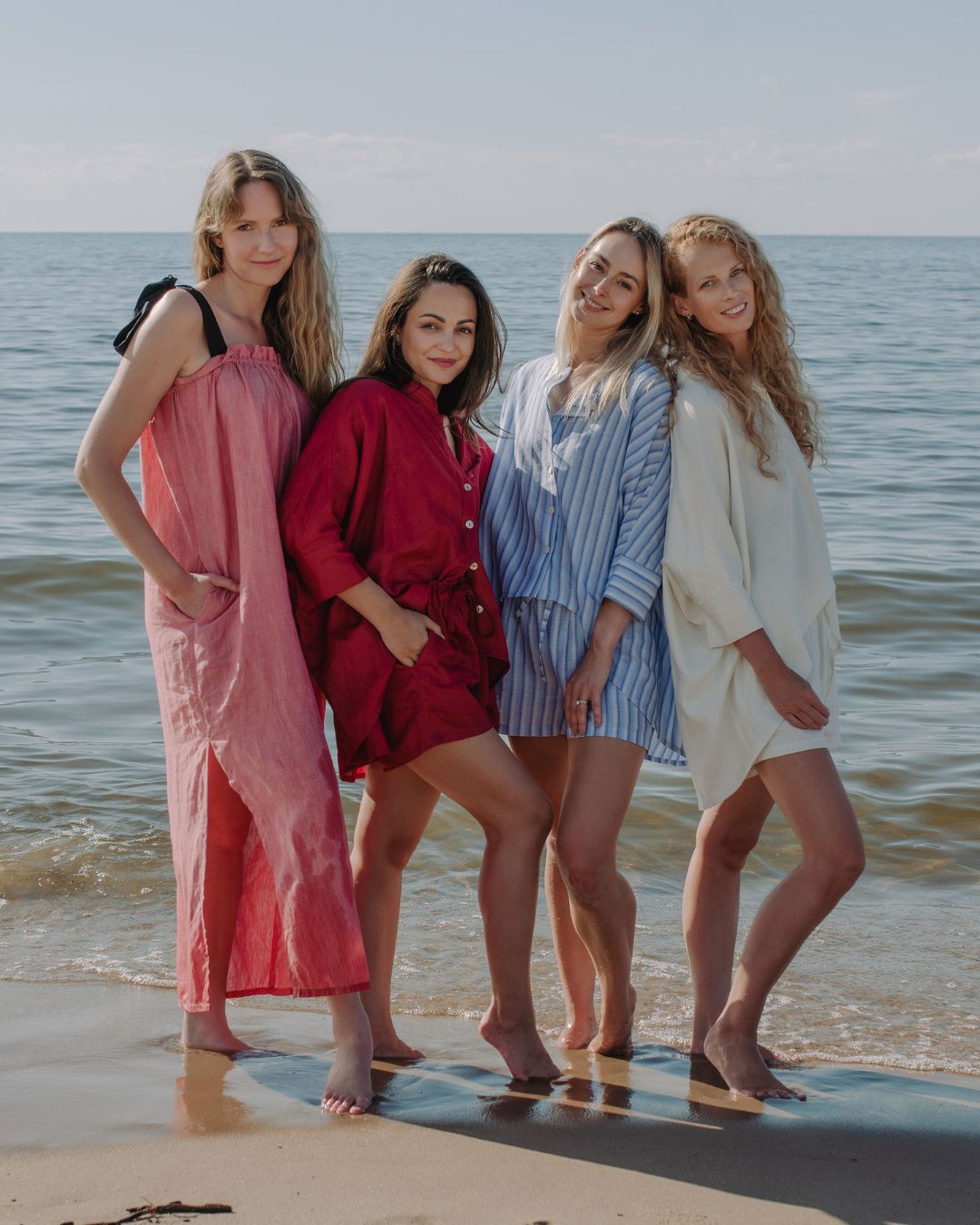
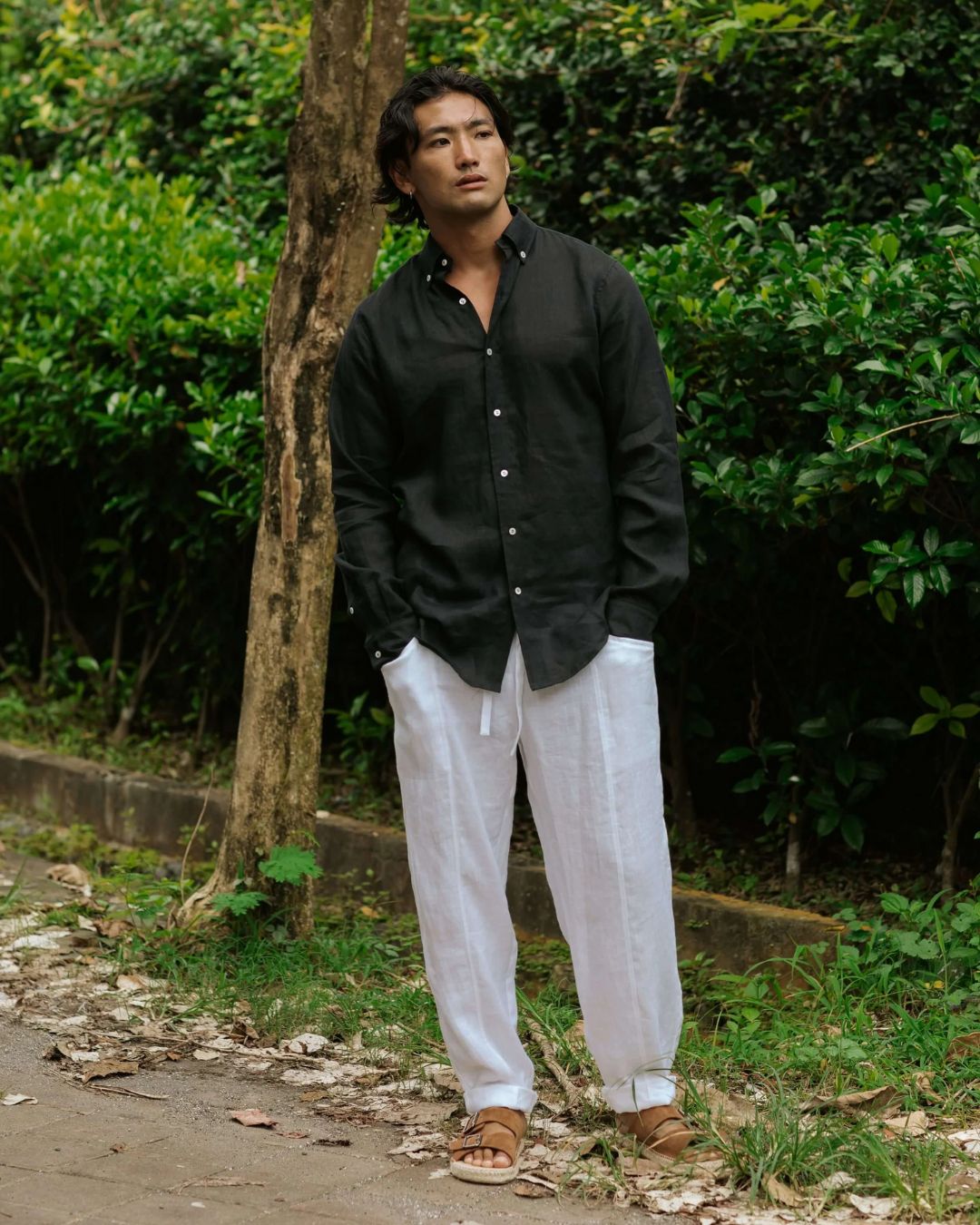
Linen earns its reputation honestly, and it's the fabric I reach for most when the humidity hits. Beyond its frequency reading, linen's fibres are hollow, which lets air move close to the skin and moisture evaporates quickly. notPERFECTLINEN's deep dive into linen's structure explains how this open weave lets linen absorb a surprising amount of moisture before it ever feels damp on you, which is exactly why it stays comfortable through a long, sticky day. And here's my favourite part: linen actually gets softer and more breathable the more you wash it. It's one of the only fabrics that genuinely improves with age, rather than wearing out.
For summer, I always reach for lightweight, looser-weave linen, relaxed linen shirts and tops, breezy linen dresses, simple linen sets. Beanchy's comparison of linen against wool and silk notes that linen's hollow fibres dissipate body heat noticeably faster than either of those fabrics, which might explain why it tops both the frequency chart and my own personal comfort chart.
Organic cotton, our everyday hero, sitting at 100 Hz
If linen is my statement piece, organic cotton is what I reach for every single day, especially for my kids. At 100 Hz, it matches the body's natural frequency, and unlike linen, it asks nothing of you, it's soft straight out of the wash, no special care required. That's part of why I lean on it so heavily for anything that touches the skin directly: underwear, t-shirts, sleepwear.
The "organic" part matters more than people realise, especially in summer. Conventional cotton is treated with pesticides and chemical finishes, which is part of why it measures lower (around 70 Hz) and can trap heat differently than its untreated counterpart. The Honest Consumer's comparison of hemp and cotton notes that switching to organic cotton alone can meaningfully cut down water use during cultivation, simply by skipping the synthetic fertilisers and pesticides conventional cotton relies on. So when I'm choosing cotton basics for hot weather, organic is doing double duty, gentler on skin, and possibly better for energy too.
Hemp, the quiet hero of summer, also around 100 Hz
Hemp doesn't get nearly enough credit in summer wardrobes, and honestly, it took me a while to appreciate it myself. At 100 Hz, it sits right alongside organic cotton, but it has a few extra tricks up its sleeve, it's naturally antimicrobial and odour-resistant, which matters a lot on a humid afternoon. It's also more durable than cotton, so hemp pieces tend to hold their shape and breathability even after repeated wash cycles in hot, sticky climates.
Hempspring's comparison of organic cotton and hemp confirms what I've come to believe, hemp's lower agricultural footprint and longer garment lifespan make it one of the more efficient natural fibres around, even though organic cotton remains easier to find and softer right away. For families like ours trying to dress kids for summer without adding to fast fashion's footprint, hemp deserves a real look.
Bamboo, cool to the touch, but check the label
Bamboo has become a popular "cooling fabric" in recent years, and I'll admit, I was a little sceptical at first. But there's something to it, bamboo viscose has this silky, genuinely cool-to-the-touch feel that's hard not to love in summer. Here's the catch though: most bamboo clothing on the market is bamboo-derived rayon, heavily processed with chemicals, and it registers at the same low 15 Hz as other synthetic-adjacent fabrics.
If frequency matters to you (and I think it should, even just as a nudge toward less-processed fabrics), look for minimally processed or mechanically processed bamboo, sometimes labelled bamboo linen, rather than the more common chemically processed bamboo viscose. Greenstory's wider comparison of sustainable fabrics is a great reference here, since it lines bamboo up against linen, hemp, and organic cotton and is upfront about how much processing changes everything about a fabric's profile. Either way, bamboo's natural UV resistance and moisture-wicking properties make it worth considering; just go in with your eyes open about which version you're buying.

What I've Learned to Avoid When It Gets Hot
Truth is, because summer is exactly when low-frequency synthetic fabrics cause the most discomfort, for me and especially for my kids. Polyester, nylon, and acrylic don't just measure low on the frequency chart, they physically trap heat and moisture against the skin. That clammy, overheated feeling so many of us associate with fast-fashion basics in summer lines up with both the energetic and the very physical case against these materials.
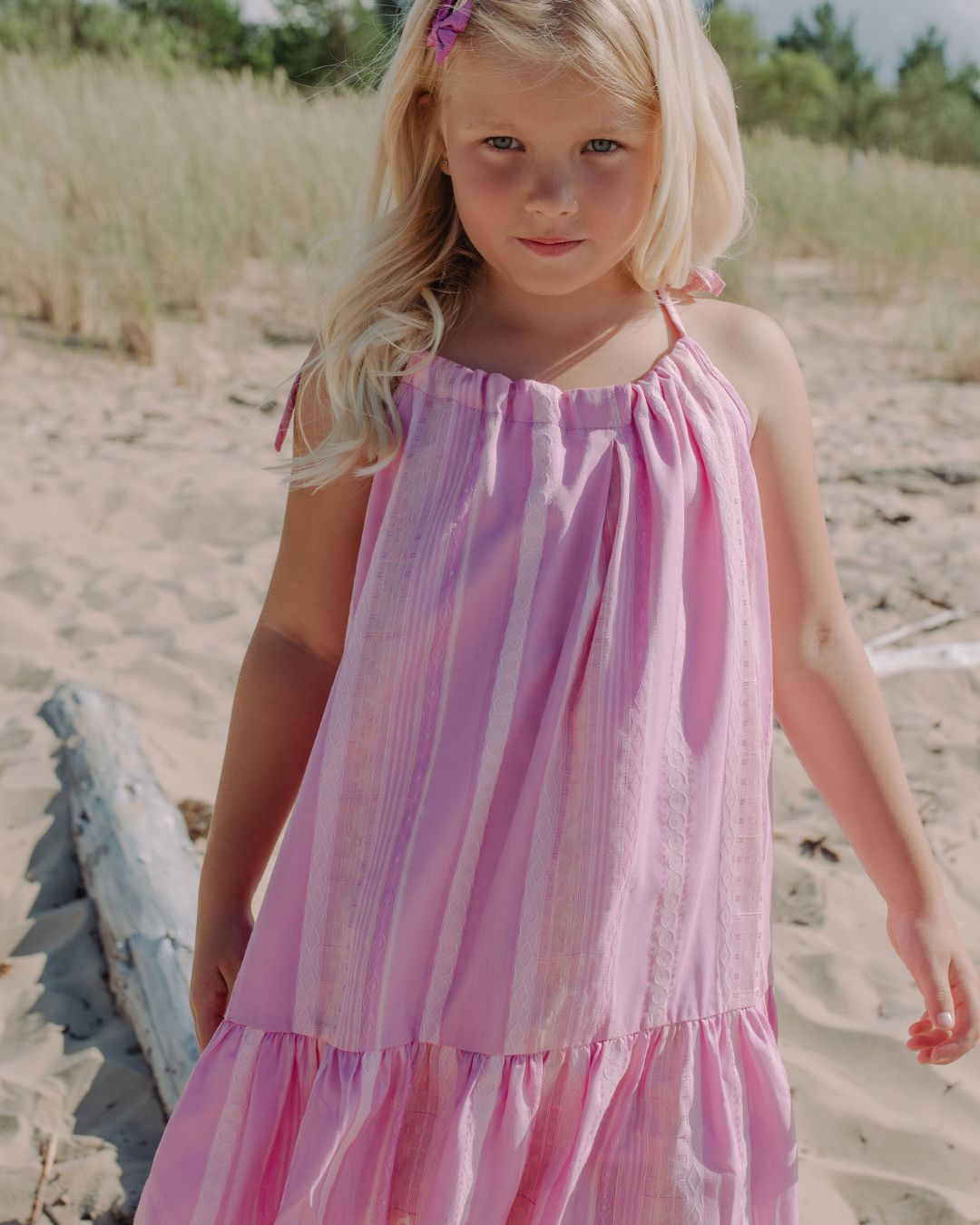
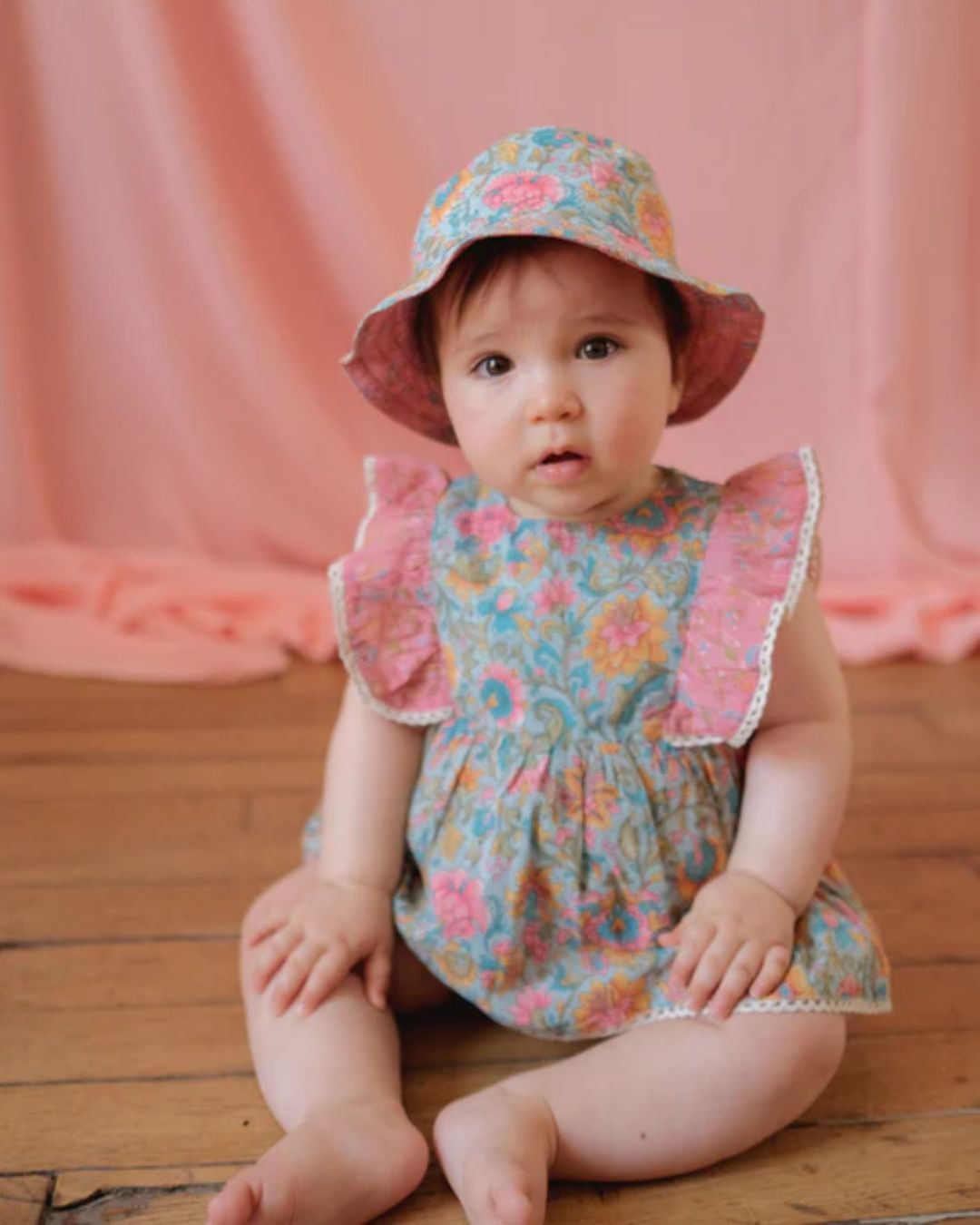
This matters even more for children, whose bodies regulate temperature less efficiently than ours do. Dressing kids in breathable, high-frequency natural fibres in summer isn't just a wellness preference for me, it's a practical comfort decision, especially for outdoor play, long school days, or travel.
Building Your Own Summer Capsule Around High-Frequency Fabrics
We really don't need to overhaul your whole wardrobe to feel the difference. A simple summer capsule built around high-frequency fabrics might look like this:
- A few lightweight linen pieces for the hottest, most humid days, shirts, dresses, or a relaxed linen set
- Organic cotton basics for everyday wear and anything that touches the skin directly, sleepwear and underwear especially
- Hemp or hemp-blend pieces for activewear or anything that needs to resist odour through a long, sweaty day
- One or two genuinely minimally processed bamboo pieces, if you can verify how it was made, for its cooling feel
Just like I shared in my original wardrobe-building advice, start with what touches your skin most. In summer, that's an even more practical rule, since those are also the pieces working hardest to keep you cool.
A Quick Note on Scepticism (Because I Get It)
I'll say the same thing here that I said in my first post: the science behind fabric frequency is still debated, and I genuinely understand why some people are sceptical of Hertz readings from a single 2003 study. But here's the thing, the physical case for linen, organic cotton, and hemp in summer doesn't depend on accepting the frequency claims at all. These are simply better-performing fabrics in heat, more breathable, more moisture-wicking, gentler on sensitive skin, and lower-impact on the planet. The frequency angle is one more lens to look through, not the only reason to make the switch.
Key Takeaways
- Linen remains my top pick for summer, both for its 5,000 Hz reading and its genuinely superior breathability in heat and humidity
- Organic cotton and hemp, both around 100 Hz, are reliable everyday choices for anything worn close to the skin
- Bamboo can be a lovely cooling option, but check whether it's minimally processed bamboo linen or chemically processed bamboo viscose before assuming it's "high frequency"
- Synthetic fabrics like polyester and nylon are a poor match for summer on both comfort and frequency grounds
- Building a summer capsule starts with replacing the pieces closest to your skin first, sleepwear, underwear, and everyday basics

FAQs
Q1. Are high-frequency fabrics actually cooler in summer, or is that just a coincidence? The fabrics that score highest for frequency, linen, organic cotton, hemp, also happen to be naturally breathable and moisture-wicking, largely because they're minimally processed. So while the frequency claim itself is still debated, the cooling benefit is well supported on physical grounds alone.
Q2. Is bamboo a good summer fabric? It depends on how it's processed. Bamboo linen (mechanically processed) is closer to the high-frequency, breathable end of the spectrum, while bamboo viscose or rayon (chemically processed) behaves more like a synthetic fabric, both in frequency and in how it performs in heat.
Q3. What's the single best fabric to switch to first for summer? In my experience, most people notice the biggest difference by starting with sleepwear and underwear, the fabrics in constant, direct contact with skin overnight and throughout the day, and choosing organic cotton or linen for those first.
Q4. Is it worth avoiding synthetic fabrics in summer even if I'm sceptical about fabric frequency? Yes, completely. Independent of any frequency claims, synthetic fabrics trap heat and moisture against the skin, which makes them genuinely less comfortable, and for children especially, less safe, in hot, humid conditions.
Q5. Can I mix high-frequency fabrics, like linen and cotton, in the same outfit? Yes, the frequency-cancelling effect noted in Dr. Yellen's research was specific to linen and wool worn together. Linen, cotton, and hemp can be mixed freely without that concern.
Let's Wrap This Up
I started writing about fabric frequency because I wanted to understand why some clothes made me feel like myself and others didn't. Summer turned out to be the perfect test, the heat doesn't forgive a bad fabric choice the way a mild spring day might. What I've learned, and what I keep coming back to at Milimilu, is that the fabrics that score highest on the frequency chart also happen to be the ones doing the most honest work for your comfort, your skin, and the planet.
Whether you're fully convinced by the Hertz readings or just curious enough to swap one synthetic piece for a linen one this summer, I hope this gave you something useful to think about. The Milimilu Lifestyle has always been about making thoughtful choices feel simple, and this summer, that starts with what you reach for in the morning.

Comments